Choosing between an electric forklift and a diesel forklift is an important decision for businesses that rely on material-handling equipment. The right choice can affect productivity, operating costs, maintenance requirements, workplace conditions, and the overall efficiency of your warehouse or industrial operation.
Electric and diesel forklifts are designed for different operating environments and applications. An electric forklift may be well suited to an indoor warehouse where low noise and zero tailpipe emissions are important, while a diesel or internal combustion forklift may be better suited to demanding outdoor applications and heavier-duty material handling.
The best option depends on how your business operates.
In this guide, we’ll compare electric and diesel forklifts, explain their key differences, and help you identify the factors to consider before choosing one for your operation.
Electric vs. Diesel Forklift: At a Glance
Before looking at the details, here’s a quick comparison.
- Typical environment
- Tailpipe emissions
- Operating noise
- Fuel / energy
- Charging / refueling
- Maintenance
- Maneuverability
- Heavy-duty applications
- Warehouse use
- Outdoor use
- Indoor / controlled environments
- None during operation
- Generally lower
- Battery electricity
- Requires charging
- Battery and electrical system maintenance
- Excellent for many warehouse applications
- Depends on model
- Excellent for many applications
- Application dependent
- Outdoor / demanding environments
- Yes
- Generally higher
- Diesel fuel
- Requires refueling
- Engine and mechanical maintenance
- Strong for outdoor applications
- Commonly suited to heavy-duty work
- Depends on facility requirements
- Often well suited
These are general comparisons. Actual performance depends on the specific forklift model, capacity, configuration, attachments, operating environment, and manufacturer specifications.
What Is an Electric Forklift?
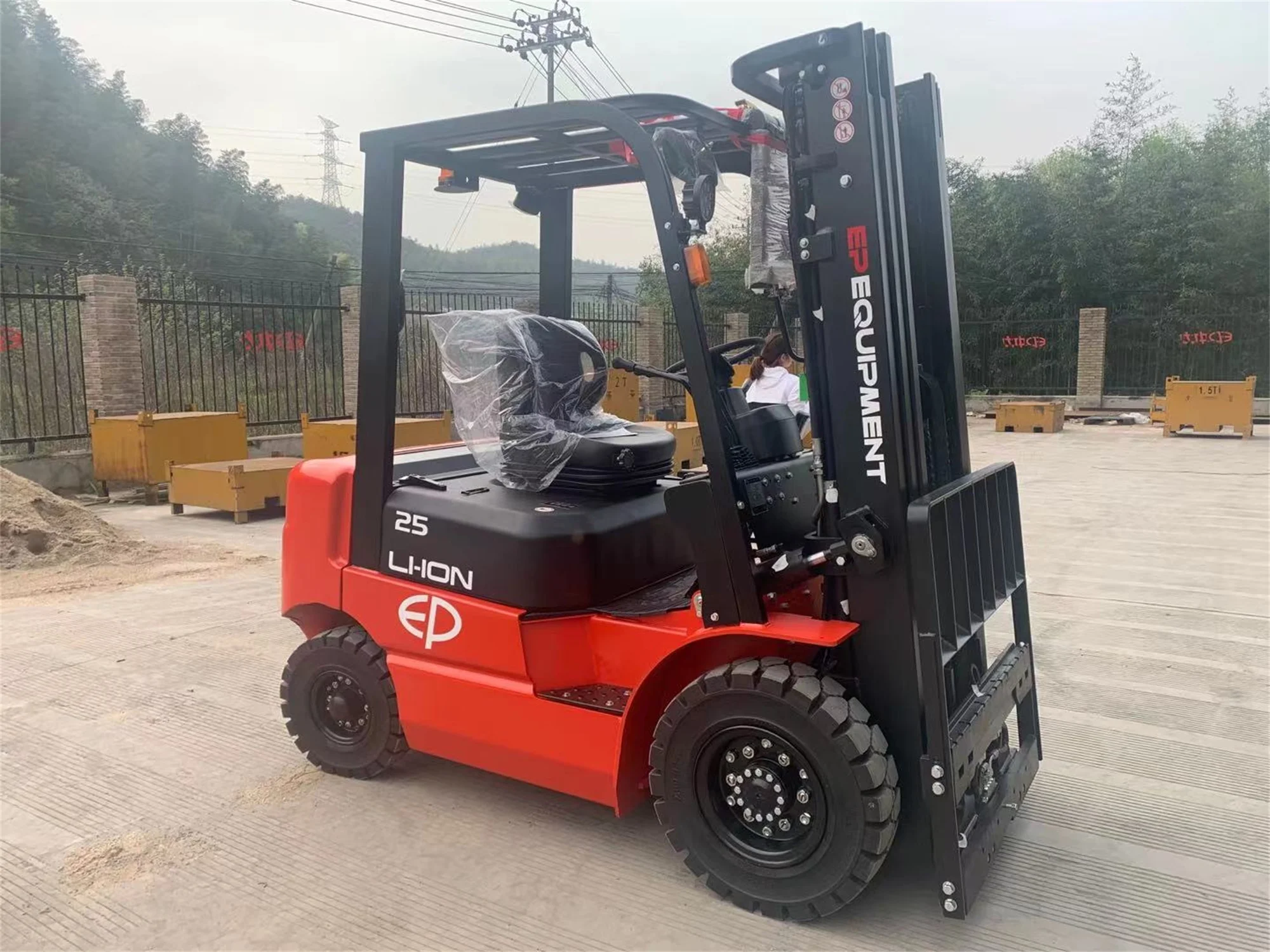
An electric forklift uses a rechargeable battery to power its drive and lifting systems.
Modern electric forklifts are widely used in warehouses, distribution centers, manufacturing facilities, retail operations, and other environments where indoor material handling is important.
Depending on the model, electric forklifts can be available in different configurations and capacities to handle a wide range of warehouse and industrial applications.
Advantages of Electric Forklifts
1. Suitable for Indoor Operations
One of the major reasons businesses choose electric forklifts is their suitability for indoor environments.
Because they do not produce tailpipe exhaust during operation, electric forklifts can be useful in facilities where air quality and emissions are important considerations.
They may be suitable for:
- Warehouses
- Distribution centers
- Manufacturing facilities
- Food-related environments
- Retail distribution operations
- Indoor storage facilities
The suitability of any forklift should still be evaluated based on the specific workplace requirements.
2. Lower Operating Noise
Electric forklifts generally operate more quietly than internal combustion equipment.
This can be beneficial in workplaces where noise levels are an important consideration.
Lower operating noise can also make communication between warehouse employees easier in certain environments.
3. No Tailpipe Emissions During Operation
Electric forklifts do not produce tailpipe exhaust while operating.
This can make them attractive for businesses that primarily operate indoors or have specific workplace requirements related to emissions.
However, businesses should still consider battery charging requirements and the overall energy infrastructure needed to operate electric equipment.
4. Efficient Operation
Electric forklifts can provide efficient operation for many warehouse applications.
Businesses operating multiple shifts should evaluate:
- Battery capacity
- Charging time
- Charging infrastructure
- Opportunity charging
- Number of batteries required
- Daily operating hours
The right battery and charging strategy is particularly important when forklifts operate continuously.
What Is a Diesel Forklift?
A diesel forklift is an internal combustion forklift powered by a diesel engine.
Diesel forklifts are commonly associated with demanding material-handling environments where businesses need equipment capable of handling heavier loads and operating outdoors.
They can be used in environments such as:
- Industrial yards
- Manufacturing facilities
- Construction-related operations
- Outdoor storage areas
- Loading and unloading areas
- Heavy-duty material handling
Actual suitability depends on the forklift’s specifications and the operating environment.
Advantages of Diesel Forklifts
1. Well Suited to Many Outdoor Applications
Diesel forklifts can be a practical option for businesses that frequently move materials outdoors.
Outdoor operations may involve:
- Uneven surfaces
- Long operating cycles
- Heavy materials
- Weather exposure
- Loading and unloading activities
The specific forklift model should always be selected according to the surface conditions and load requirements.
2. Suitable for Heavy-Duty Material Handling
Diesel forklifts are commonly available in higher-capacity configurations designed for demanding material-handling applications.
They can be considered when businesses need to move:
- Heavy industrial materials
- Machinery
- Large pallets
- Construction materials
- Manufacturing components
However, the required capacity should always be determined from the actual load requirements rather than simply choosing a larger forklift.
3. Fast Refueling
Unlike electric forklifts, diesel forklifts do not require battery charging between operating periods.
Refueling can be relatively quick, which may be advantageous for operations that need equipment available for extended periods.
However, businesses should also account for fuel storage, handling and operating costs.
Electric vs. Diesel: Which Has Lower Operating Costs?
There is no universal answer.
Operating cost depends on factors such as:
- Purchase price
- Electricity or fuel costs
- Operating hours
- Maintenance
- Battery replacement
- Fuel consumption
- Operator requirements
- Equipment utilization
- Expected lifespan
For example, an electric forklift may provide attractive operating economics in a high-utilization indoor warehouse, while a diesel forklift may be more practical for an outdoor operation requiring heavy-duty equipment.
This is why businesses should evaluate total cost of ownership, rather than comparing purchase prices alone.
Electric vs. Diesel Maintenance
Maintenance is another important consideration.
Electric Forklift Maintenance
Electric forklifts typically require attention to:
- Battery condition
- Charging system
- Electrical components
- Tires
- Brakes
- Steering
- Hydraulic systems
- Forks and mast
Battery maintenance and charging practices can have a significant impact on equipment performance and battery lifespan.
For businesses using electric forklifts across multiple shifts, proper battery management becomes particularly important.
Diesel Forklift Maintenance
Diesel forklifts have an internal combustion engine and therefore require maintenance associated with engine-powered equipment.
This may include:
- Engine oil
- Filters
- Cooling system
- Fuel system
- Engine components
- Tires
- Brakes
- Hydraulic systems
- Forks and mast
Regular preventive maintenance can help identify problems before they result in unexpected equipment downtime.
Which Forklift Is Better for Indoor Warehouses?
For many indoor warehouse environments, electric forklifts can be an attractive option because of their low operating noise and lack of tailpipe emissions.
They can work particularly well where:
- Aisles are relatively controlled
- Indoor air quality matters
- Noise needs to be minimized
- Loads are within the equipment's rated capacity
- Charging infrastructure is available
However, electric does not automatically mean “best.”
Businesses should still evaluate:
Load → Lift height → Aisle width → Operating hours → Battery requirements → Charging infrastructure
before making a decision.
Which Forklift Is Better for Outdoor Operations?
For demanding outdoor applications, diesel forklifts can often be considered because of their suitability for heavy-duty material handling.
They may be appropriate for operations involving:
- Outdoor yards
- Construction materials
- Heavy industrial products
- Loading and unloading
- Large pallets
- Uneven operating surfaces
Again, the specific equipment must match the environment and application.
What About Mixed Indoor and Outdoor Operations?
Some businesses need a forklift that can move between indoor and outdoor areas.
In this situation, don’t simply choose based on the fuel type.
Consider:
1. Where does the forklift spend most of its time?
If the majority of work occurs indoors, an electric option may deserve closer consideration.
2. How heavy are the loads?
Heavy loads may require a particular capacity class or forklift configuration.
3. What are the outdoor conditions?
Consider the surface, weather exposure and operating environment.
4. How long does the equipment operate each day?
Long operating hours can significantly influence your battery or fuel requirements.
5. What charging or refueling infrastructure is available?
Infrastructure can determine whether a particular forklift is practical for your facility.
Electric vs. Diesel Forklift: Questions to Ask Before Buying
Before choosing a forklift, ask:
Operating Environment
- Will it operate indoors, outdoors, or both?
- Are emissions a concern?
- Are noise levels important?
Load Requirements
- What is the maximum load?
- What is the typical load?
- How high must loads be lifted?
Warehouse Layout
- What is the aisle width?
- What is the turning space?
- What type of storage system is used?
Operating Schedule
- How many hours per day?
- How many shifts?
- Will the forklift operate continuously?
Infrastructure
- Is battery charging infrastructure available?
- Is fuel storage and refueling available?
- Can the facility support the required equipment?
Long-Term Costs
- What are the energy costs?
- What maintenance is required?
- What replacement parts are needed?
- What is the expected battery or equipment lifespan?
Electric or Diesel: Which One Should You Choose?
There is no single forklift type that is right for every business.
Consider an electric forklift when:
- Most operations are indoors
- Low noise is important
- Tailpipe emissions are undesirable
- The facility has suitable charging infrastructure
- The loads and operating conditions match the equipment's specifications
Consider a diesel forklift when:
- Operations are primarily outdoors
- Heavy-duty material handling is required
- Long operating periods are expected
- Rapid refueling is important
- The operating environment is appropriate for internal combustion equipment
The final decision should be based on your actual application rather than general assumptions about electric or diesel equipment.Lorem ipsum dolor sit amet, consectetur adipiscing elit. Ut elit tellus, luctus nec ullamcorper mattis, pulvinar dapibus leo.
The Right Forklift Starts With the Right Application
Choosing between an electric and diesel forklift is only one part of the equipment-selection process.
Businesses should also evaluate:
- Forklift capacity
- Lift height
- Warehouse aisle width
- Operating environment
- Equipment type
- Battery or fuel requirements
- Maintenance support
- Total cost of ownership
A forklift that performs well in one warehouse may not be appropriate for another.
Understanding your operation first allows you to select equipment that supports productivity, safety and long-term operating efficiency.
Need Help Choosing the Right Forklift?
VA Materials provides forklift and material-handling solutions for businesses in the Philippines.
Whether your operation requires electric forklifts, internal combustion forklifts, warehouse equipment, batteries or related material-handling solutions, selecting equipment based on your actual operating requirements is an important first step.
Explore VA Materials’ forklift and material-handling solutions to identify equipment suited to your operation.