Loading and unloading goods is a critical part of warehouse and distribution operations.
Every time a truck arrives at a warehouse, products need to move safely and efficiently between the vehicle and the loading dock. However, the height difference between a truck bed and the warehouse floor can make this process difficult without the right equipment.
A dock leveler helps bridge this gap.
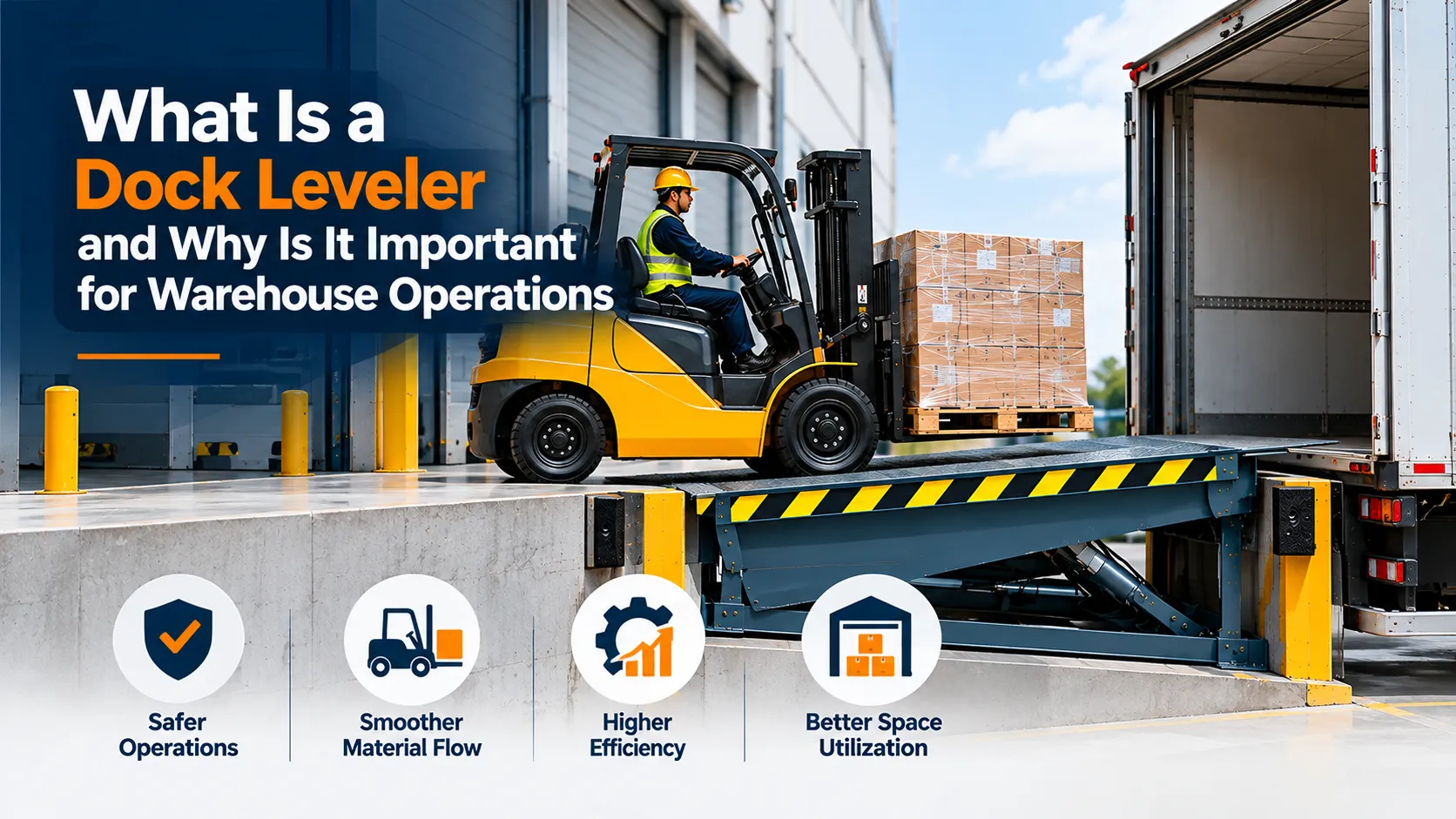
Dock levelers are loading dock equipment designed to create a smoother transition between the warehouse floor and the truck bed, allowing forklifts, pallet trucks, and other material-handling equipment to move goods more efficiently.
For warehouses that regularly load and unload trucks, selecting the right dock leveler can have an impact on operational efficiency, safety, equipment movement, and loading dock productivity.
This guide explains what a dock leveler is, how it works, the main types available, and what businesses should consider when selecting one.
A dock leveler is a mechanical or hydraulic platform installed at a loading dock.
Its primary function is to compensate for the height difference between the warehouse loading dock and the truck trailer.
When a truck is positioned at the dock, the dock leveler creates a bridge between:
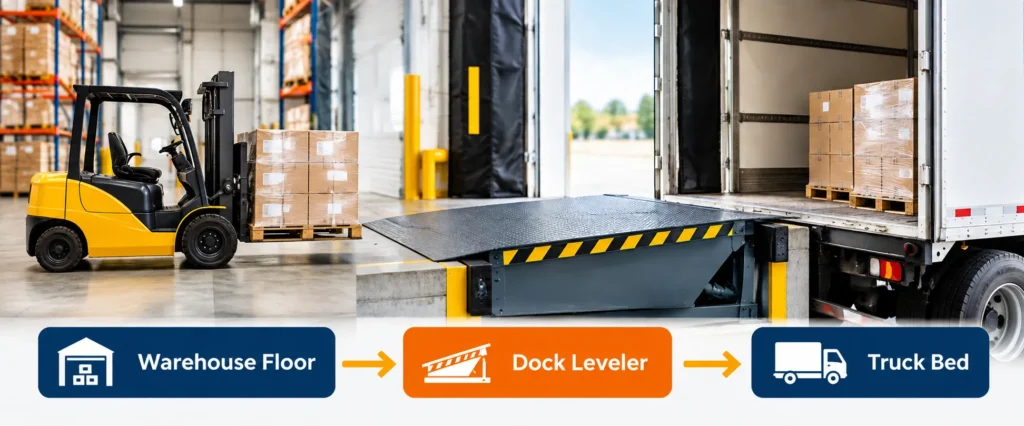
This allows material-handling equipment to move more smoothly between the facility and the vehicle.
Dock levelers are commonly used in:
Without an appropriate transition between the warehouse and truck, loading and unloading can become more difficult.
A dock leveler can help improve the loading process by providing a more suitable transition for material-handling equipment.
Key benefits include:
The exact benefits depend on the dock configuration, equipment, truck types, and operating procedures.
A dock leveler is positioned at the edge of a loading dock.
When a truck arrives, the leveler is activated and its platform is positioned to accommodate the height difference between the dock and truck.
The forklift or pallet-handling equipment can then travel across the platform.
A simplified process looks like this:
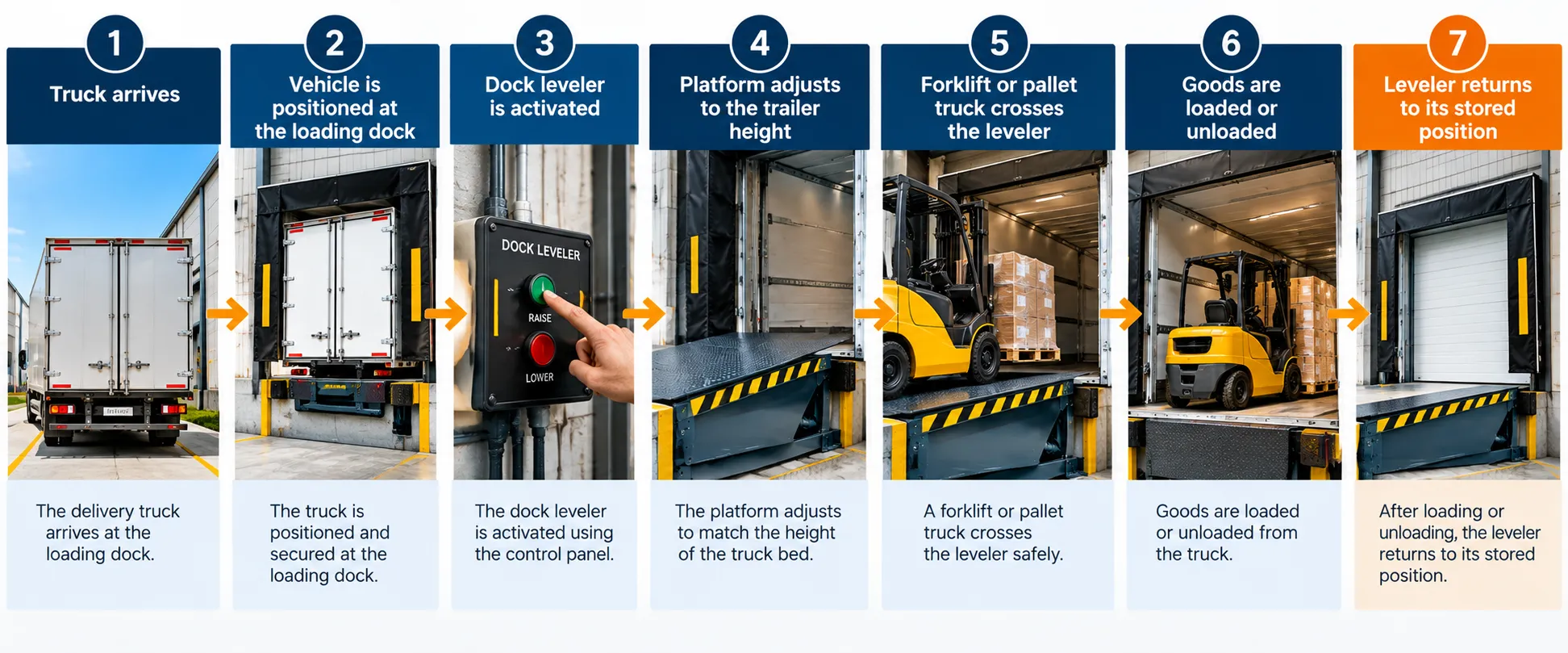
The exact operating procedure depends on the type of dock leveler.
Dock levelers are available in different designs.
The most common categories include:
Each design has different operating characteristics.
The appropriate choice depends on factors such as:
Each design has different operating characteristics.
A mechanical dock leveler uses a mechanical system to position the platform.
Depending on the design, the operator may activate the leveler through a manual mechanism.
Mechanical dock levelers can provide:
They may be considered for warehouses with moderate loading requirements.
Hydraulic dock levelers use hydraulic components to raise and position the platform.
The system is generally controlled using a powered mechanism.
Hydraulic systems can provide:
Hydraulic dock levelers can be attractive for facilities where loading and unloading occur frequently.
However, the system should be selected based on actual dock requirements and manufacturer's specifications.
A simple comparison:
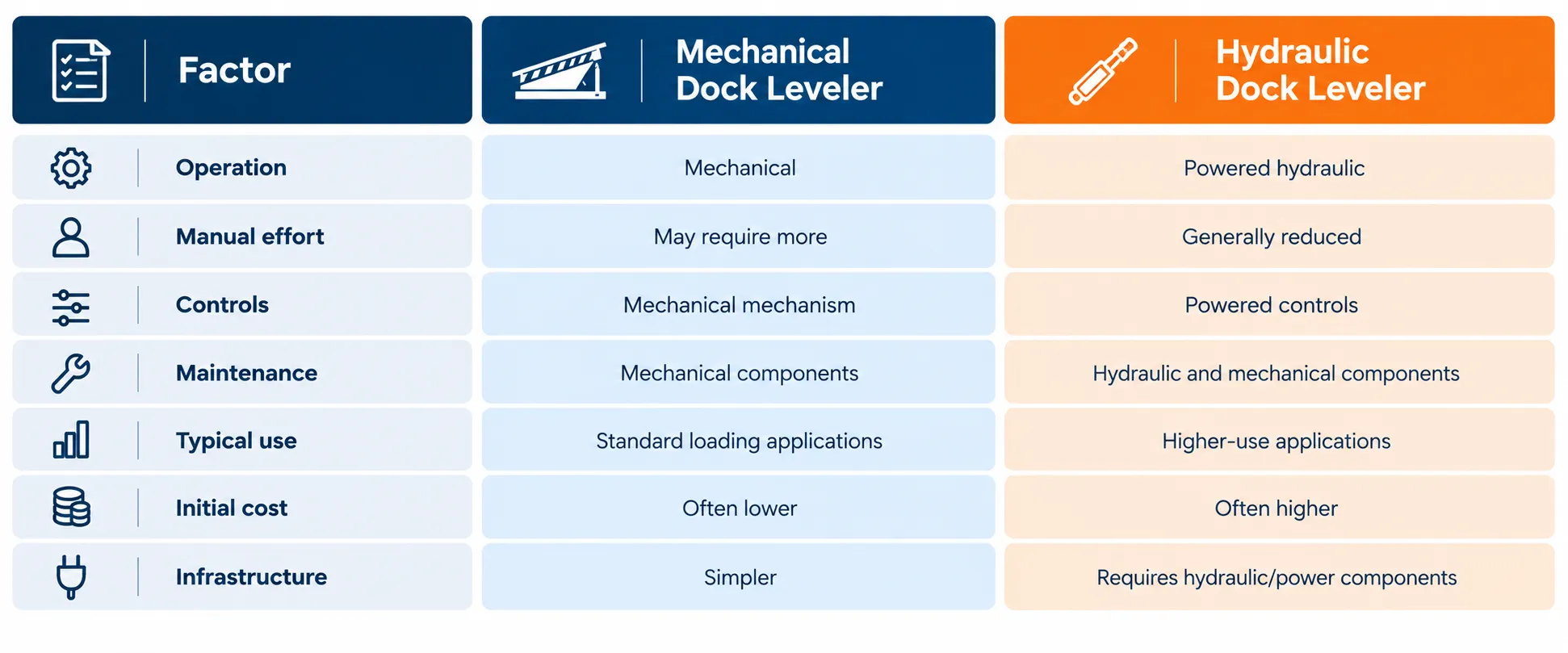
Neither option is automatically better.
The right choice depends on the facility's loading volume, equipment, budget and operating requirements.
Dock leveler capacity is an important specification.
The required capacity should account for:
For example, the dock leveler must be capable of safely supporting the combined operating load imposed by the material-handling equipment and goods.
Businesses should never select a dock leveler based only on the weight of the products being moved.
The combined load and equipment requirements must be considered.
Always follow the manufacturer's rated capacity and installation requirements.
These are two different specifications.
Describes how much weight the forklift is designed to safely lift under specified conditions.
Describes how much load the dock leveler is designed to support under its specified operating conditions.
For a loading dock system to work properly, both pieces of equipment must be appropriate for the application.
For example:
Forklift + Load + Dynamic Forces
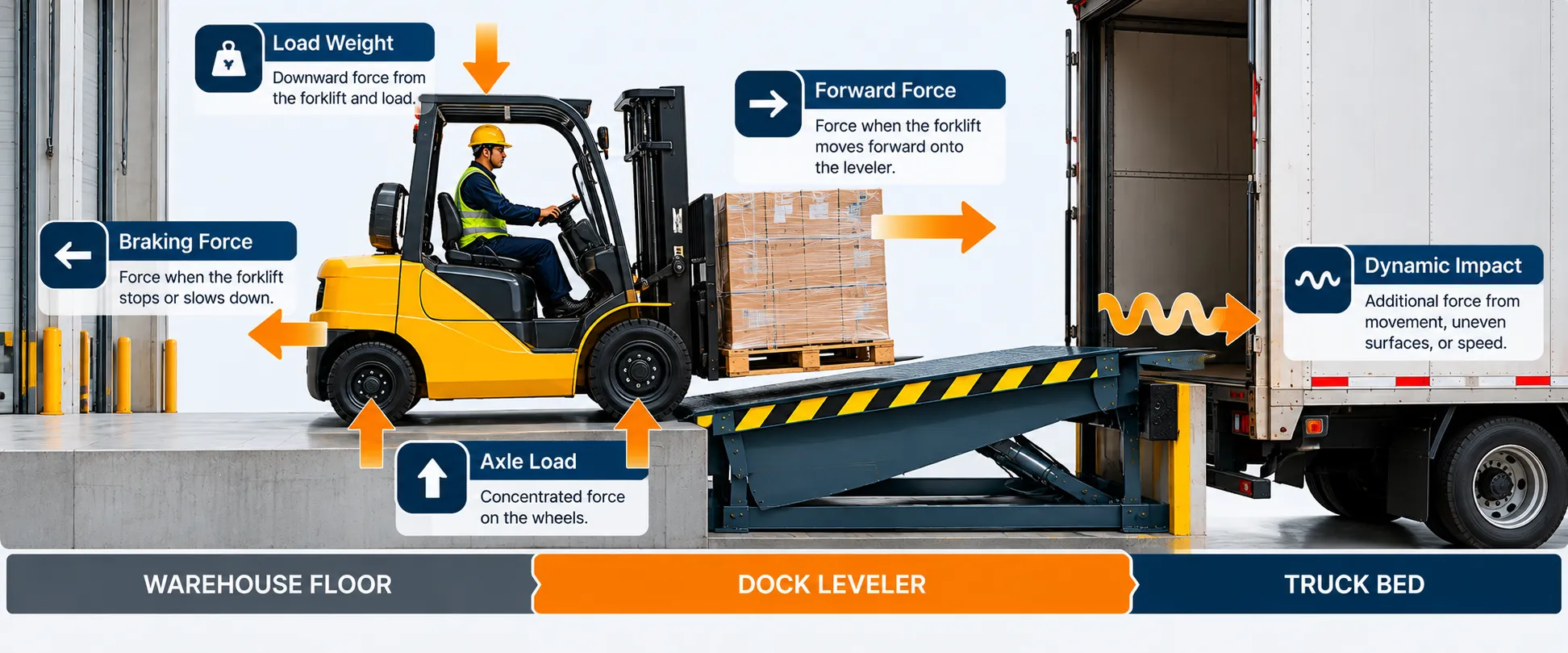
must be compatible with the dock leveler's rated capacity.
Dock levelers help create a transition between different elevations.
This can make it easier for forklifts and pallet-handling equipment to move goods between the warehouse and truck.
A suitable loading dock system can help streamline repetitive loading and unloading operations.
This is particularly important for warehouses handling multiple truck deliveries each day.
Using appropriate material-handling equipment across the dock can reduce the need for workers to manually move heavy palletized goods.
A properly configured loading dock can support a more predictable material flow:
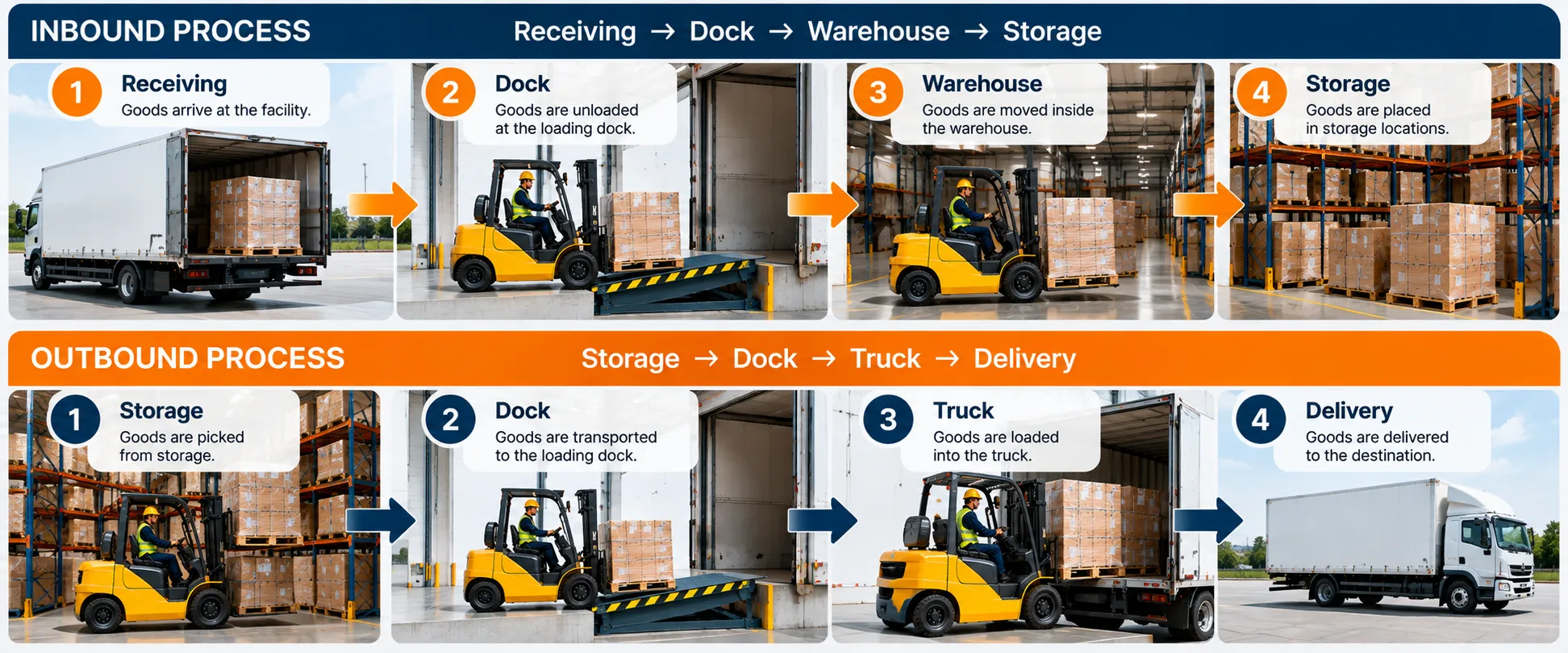
Dock levelers are closely connected to forklift operations.
When a forklift moves goods from a warehouse into a truck, it needs a suitable transition between the dock and vehicle.
The dock leveler provides that transition.
This means the selection of the dock leveler should consider the forklift being used.
Important factors include:
A warehouse shouldn't evaluate its dock leveler independently from its material-handling equipment.
The lip is the hinged portion at the front of the dock leveler platform.
It extends toward the truck trailer to create the transition between the dock and vehicle.
The lip is an important part of the loading dock system because it helps accommodate the gap between the dock platform and trailer.
When evaluating a dock leveler, businesses should consider:
These specifications vary by equipment design.
The vertical range refers to the difference in height that the dock leveler can accommodate.
This is important because truck beds do not all sit at exactly the same height.
Depending on the vehicle and loading dock configuration, the dock leveler may need to compensate for differences between the warehouse floor and trailer.
Depending on the vehicle and loading dock configuration, the dock leveler may need to compensate for differences between the warehouse floor and trailer.
Before selecting a dock leveler, evaluate the range of truck heights expected at the facility.
Businesses should evaluate several factors before purchasing a dock leveler.
How many trucks are loaded or unloaded each day?
A high-volume facility may have different requirements from a warehouse handling only a few deliveries per day.
What types of vehicles use the loading dock?
Consider:
Identify the equipment that will cross the dock leveler.
For example:
The leveler must be appropriately rated for the equipment and loads.
Calculate the required operating capacity.
Forklift Weight + Load Weight + Dynamic Loading
The selected dock leveler should meet the required rating with an appropriate safety margin according to applicable standards and manufacturer specifications.
How often will the dock leveler be used?
A high-volume distribution center may need a more robust solution than a smaller warehouse.
Consider:
A loading dock is an operational asset, so maintenance availability should be considered during equipment selection.
If you are considering a powered or hydraulic dock leveler, determine whether the facility has the required electrical infrastructure.
Like other industrial equipment, dock levelers require regular inspection and maintenance.
The exact maintenance schedule should follow the manufacturer's recommendations.
Areas that may require inspection include:
Check for:
Inspect for:
For hydraulic systems, check for:
Inspect:
Check applicable:
Any damaged component should be evaluated before the equipment continues operating.
Several issues can affect dock leveler performance.
A hydraulic leak can reduce system performance and should be inspected promptly.
The lip is exposed to repeated loading and movement and can experience wear or damage.
Heavy equipment and loads can contribute to structural wear if the dock leveler is improperly selected or operated.
Springs, hinges, linkages and other components can wear over time.
Using equipment beyond its rated capacity can create unnecessary stress and increase safety risks.
Loading docks are high-traffic work areas.
Businesses should establish appropriate operating procedures for:
Dock levelers should only be operated according to manufacturer instructions and applicable workplace safety requirements.
Operators should also be appropriately trained for the equipment they use.
Before purchasing a dock leveler, review:
The decision depends on how your loading dock operates.
The final decision should be based on the facility, equipment, operating frequency and manufacturer's recommendations.
A dock leveler should not be viewed as an isolated piece of equipment.
It works together with:
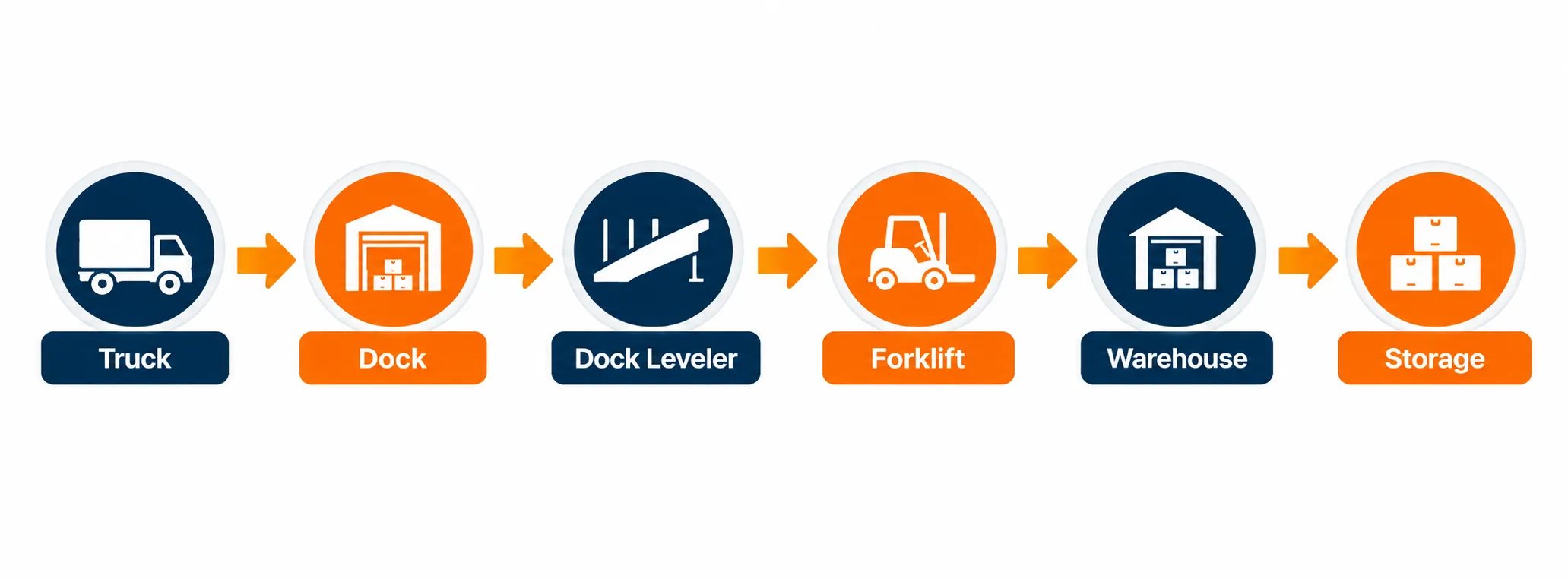
If one part of this system is poorly matched to the others, the entire material flow can become less efficient.
For example, a high-capacity forklift may require a dock leveler with an appropriate load rating.
Similarly, a high-volume distribution center may need loading dock equipment designed for frequent operation.
A loading dock is one of the busiest points in many warehouses.
Every truck that enters the facility may involve:
Even small inefficiencies can accumulate when repeated throughout the day.
Selecting the right dock leveler and maintaining it properly can therefore contribute to a more organized material-handling process.
VA Material provides material-handling solutions for businesses in the Philippines.
If you're evaluating a dock leveler, begin by identifying your dock height, trailer types, forklift requirements, loading volume and operating conditions.
These details can help determine the appropriate loading dock equipment for your facility.
Explore VA Material's dock leveler and material-handling solutions to identify equipment suited to your loading dock requirements.
A dock leveler provides an important connection between a warehouse loading dock and the vehicles that deliver or collect goods.
The right dock leveler should be selected based on:
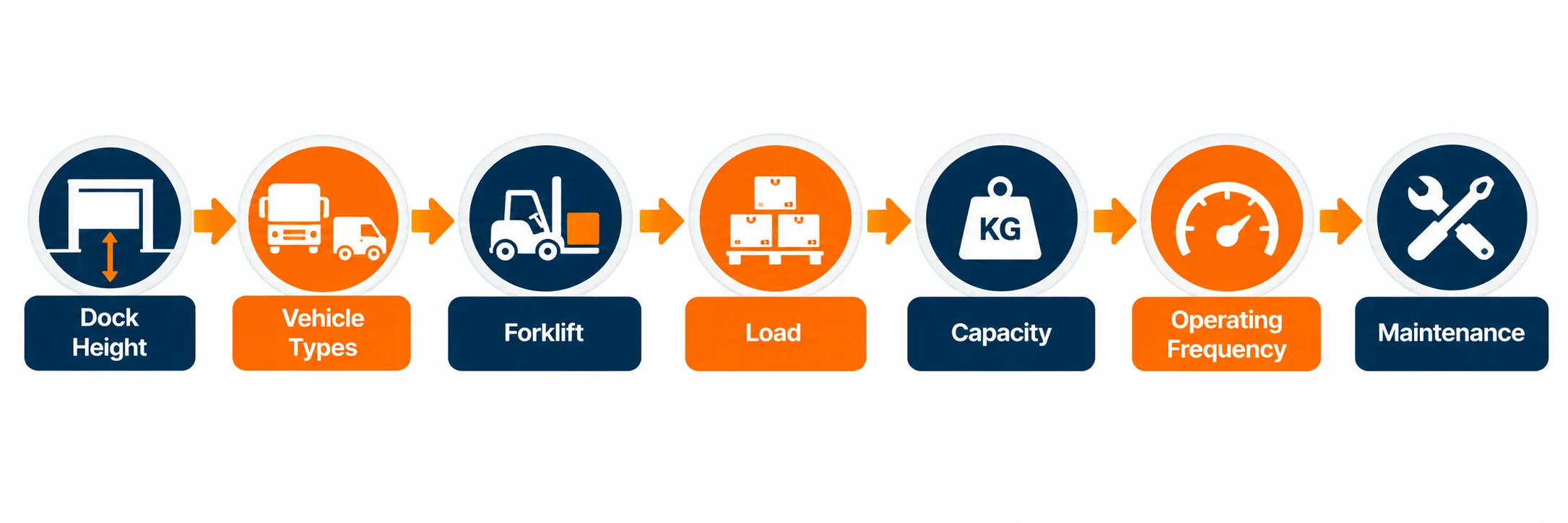
Mechanical and hydraulic dock levelers can both be effective solutions when correctly matched to the application
Rather than selecting equipment based solely on price or capacity, businesses should evaluate the entire loading process and choose equipment that fits the way their facility operates.